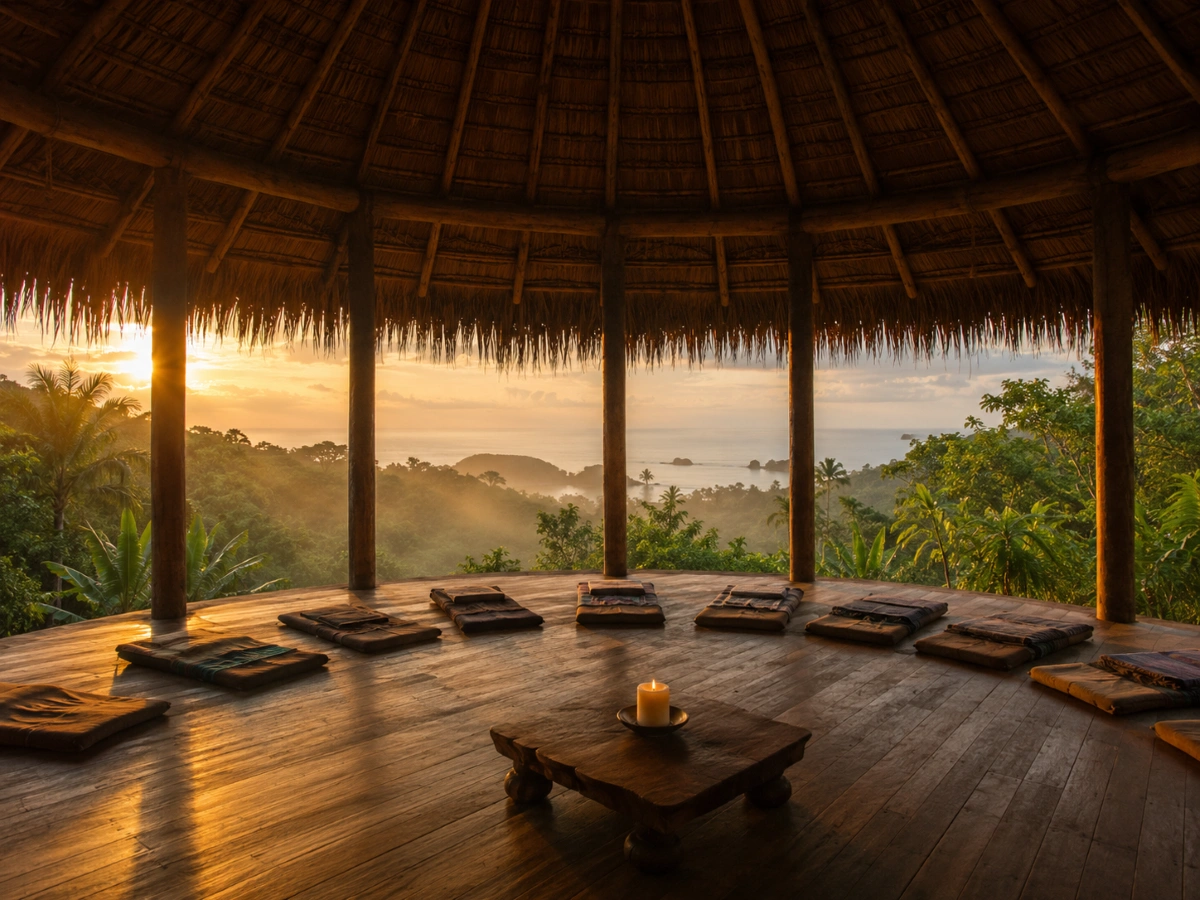
Yes, people over 50 can drink ayahuasca, and plenty do. Age by itself is not what makes it risky. Your heart, your blood pressure, and the prescriptions in your cabinet are. After 50 those three things change, and they change what a safe ceremony looks like for you. This guide covers what actually shifts with age, which medications and conditions rule people out, what the research on older adults shows, and the medical screening you should ask for before you book anything. Our oldest guest was 68. We ask for an ECG from everyone over 50. Both facts matter, and I’ll explain why.
One thing up front: this is general information, not medical advice. Talk to your own doctor before you consider a retreat, and never stop a prescription on your own to qualify for one.
What ayahuasca is, in plain terms
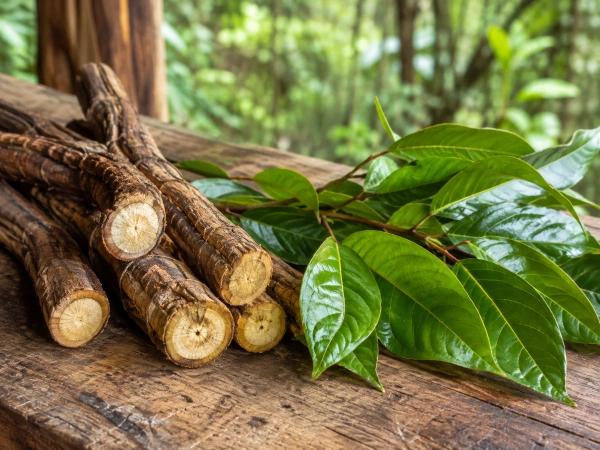
Ayahuasca is a plant medicine brewed from the Banisteriopsis caapi vine and a DMT-containing leaf, usually chacruna or chaliponga. Drunk in a guided ceremony, it brings on several hours of vivid inner experience, emotional release, and often vomiting. Indigenous peoples of the Amazon have used it for generations for healing and spiritual work.
The vine matters more than most first-timers realize. It contains compounds that act as MAO inhibitors, which is what lets the DMT work when you drink it instead of smoke it. That same MAO-inhibiting effect is the reason certain foods and medications become dangerous around ceremony. Hold that thought, because it drives most of the medical rules below.
Is there an age limit for ayahuasca?
There is no fixed upper age limit, and no serious center sets one on age alone. What decides it is your health. We have served guests in their 60s. Our oldest was 68. For context, our average guest is 39, and we do not accept anyone under 24, because younger people tend to struggle more with settling the experience afterward.
The honest version: a healthy 66-year-old is a better candidate than a 45-year-old with an untreated heart arrhythmia and a daily antidepressant. So stop asking “am I too old” and start asking “is my heart sound, and what am I taking every morning.” Those are the questions a real screening answers.
What changes in your body after 50
Three things change with age, and each one raises the stakes. Your body clears substances more slowly, so a given dose hits harder and lasts longer. You are more likely to take daily medication, which is where the real danger sits. And your cardiovascular system has less margin than it did at 30.
Sensitivity is the first practical effect. Older bodies often need less medicine, not more. Rick Doblin, who runs the psychedelic research nonprofit MAPS, made this point in a 2019 New York Times feature on seniors and ayahuasca: a smaller dose usually does the job for older users. We see the same thing in our maloca. Lorenzo, our lead healer, starts first-night doses at 40 to 60 ml and builds up only if your body asks for it. He would rather your first night be gentle than overwhelming.
The second effect is more mechanical. After hours lying still in ceremony, standing up too fast can drop your blood pressure and make you dizzy. It sounds minor. On a dark hillside at 2 a.m. it is not. We walk older guests to the bathroom for exactly this reason.
Is ayahuasca safe for your heart and blood pressure?
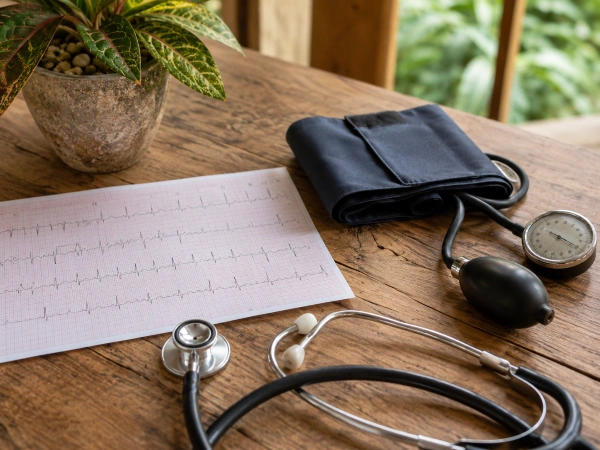
Your heart is the first thing to screen after 50, and for some people it is a hard stop. Ayahuasca raises blood pressure and heart rate for the first few hours of a ceremony. In a healthy body those increases are temporary and tolerated. In a body with heart disease or uncontrolled high blood pressure, they are a real risk, which is why cardiovascular disease sits on the contraindication list in the pharmacology literature.
Here is where I can tell you something no other article on this topic can. In 2020 we had a guest arrive with a heart arrhythmia he did not disclose. During ceremony he developed cardiac symptoms. Our medical director, Dra. Sofia Vargas Mora, was on site, stabilized him, and evacuated him by vehicle to the hospital in Nicoya. He recovered fully and flew home two days later. That night changed how we screen. We now ask for an ECG from anyone over 50 or with any cardiac history, and full medical clearance with an ECG and bloodwork for anyone over 60. We also added an AED to the medical kit. A doctor is present at every single ceremony, awake, with equipment ready.
If you take blood pressure medication, that is not an automatic no, but it needs your doctor’s review and ours. Uncontrolled hypertension is an automatic no. We would rather lose the booking than gamble with your heart.
Which medications turn ayahuasca dangerous?
This is the biggest risk after 50, bigger than age or heart rate, because more of us take daily prescriptions by this point. The worst offenders are antidepressants. SSRIs and SNRIs raise serotonin, and ayahuasca’s MAO-inhibiting compounds raise it too. Combine them and you can trigger serotonin syndrome, a reaction the U.S. National Library of Medicine describes as potentially life-threatening.
We do not let anyone drink on an SSRI. We require a full taper, supervised by your prescribing doctor and confirmed by Dra. Vargas, and completed before you arrive. That means 6 weeks off most SSRIs and 8 weeks off fluoxetine because it lingers longer. Lithium and pharmaceutical MAOIs are absolute no’s, no taper, no exception. The MAOI issue is also why our pre-retreat diet cuts aged cheese, fermented foods, and alcohol: those interact with the same pathway.
Never taper a psychiatric medication on your own to qualify. Stopping too fast is its own danger, and it is the single most common preparation mistake we see. If your doctor will not support a taper, that is your answer for now, and we will tell you so.
What the research says about older adults (2026)
The research is thin but improving, and two studies do the heavy lifting. The first is the largest safety survey we have. A 2022 study in PLOS Global Public Health that surveyed 10,836 ayahuasca drinkers found that 69.9% had a physical reaction such as vomiting, while only 2.3% ever needed medical attention. About 55.9% reported some mental or emotional difficulty in the weeks after, and 88% of those people viewed it as part of positive growth. The finding that matters most for this page: older age at first use was itself a risk factor for physical adverse effects. That is the primary-source reason to screen older bodies harder, and most articles on seniors and ayahuasca never mention it.
The second study is about older adults specifically. In a 2024 paper in the American Journal of Geriatric Psychiatry, researchers followed 62 adults aged 60 and over and compared them with 62 younger adults across psychedelic ceremonies and retreats, ayahuasca among them. Two results stand out, and I’ll unpack the second one below because it changes how you should choose a retreat.
Do older adults get less out of the medicine?
The intensity is often milder after 60. The benefit is not. In that 2024 study, the older group reported acute effects up to 50% weaker than younger participants, the visions and the sense of ego dissolving, yet they showed similar gains in wellbeing afterward. Read that twice. Softer experience, comparable result.
Now the part that should shape your decision. In older adults, the strength of the experience did not predict how much better they felt. The quality of their connection to other people did. Relational experience before and after the sessions was the predictor of improvement. And the people who came in with a past psychiatric diagnosis improved the most.
So here is my contrarian take, and it is one plenty of center owners will not like. For older adults, chasing the strongest brew or cramming 6 or 7 ceremonies into a week gets it backwards. If connection drives the benefit and your body is more sensitive, then fewer, gentler, well-held ceremonies in a small group fit you better than a high-volume, high-intensity week. That is why we run 4 ceremonies over 10 days with real integration time between them, not a nightly marathon. The data and 8 years of watching older guests point the same way.
The benefits people over 50 actually report
Older guests tend to come for different reasons than younger ones, and they tend to leave with different gains. Younger people often arrive asking about a relationship or a career. Guests in their 60s and 70s more often arrive asking what their life added up to, how to face loss, and how to make peace with death. That existential angle is the thread running through most reporting on seniors and the medicine.
Our own outcome data backs up the emotional side. Across more than 280 guests who completed follow-up surveys, the average score on the PHQ-9 depression scale dropped 5.8 points and held at the 3-month mark, a change clinicians treat as clinically meaningful. This is observational data from our guests, not a clinical trial, and we say so plainly, but it is real and we track it.
One guest stays with me. A woman of 72 with terminal cancer came to us to make peace with dying. Her four ceremonies were quiet, tender, and calm, not the dramatic ordeal people picture. She left lighter. After 8 years I have stopped predicting who will have the hardest time by their diagnosis. The guests who struggle are not the sickest ones. They are the most rigid ones. Willingness matters more than age.
What to demand from a retreat after 50
If you take one thing from this page, take this checklist. After 50, the retreat’s screening is the safety feature that matters most, and a good center will welcome every one of these questions. If a center cannot answer them with specifics, walk away no matter how good the website looks.
| What to ask | Why it matters after 50 | What we do |
|---|---|---|
| Is my medical form reviewed by a doctor? | Older bodies and polypharmacy need clinical eyes, not a checkbox | A physician reviews every form; ECG required over 50, full clearance over 60 |
| Is a doctor on site during ceremony? | Cardiac and blood-pressure risk peaks in the first hours | Dra. Vargas, MD, is present and awake at every ceremony |
| What is your medication taper protocol? | SSRIs and other drugs can be life-threatening with ayahuasca | 6-week SSRI taper (8 for fluoxetine), co-supervised with your own doctor |
| How far is the nearest hospital? | Distance to care is the difference in an emergency | 20 min to the Cobano clinic, 90 min to Nicoya hospital, 45 min air ambulance to San Jose |
| How large is the group? | Older adults benefit most from connection, not crowds | Maximum 12 guests, 3 healers, 2 facilitators |
| What support comes after? | Integration is where the benefit sticks | Follow-up calls at 1 week, 3 weeks, and months 2, 6, and 12 |
Who should not do ayahuasca after 50
Some conditions are a firm no, and the categories below drive most rejections. We turn away about 13% of applicants outright, and a chunk more who will not complete a required taper. Every rejection is a problem that did not happen. Use this as a general guide to how a careful center thinks, not as a verdict on your own case, which only a physician who knows your history can give.
| Green light (case by case) | Caution, needs review or a taper | Hard stop |
|---|---|---|
| Well-controlled mild conditions | Controlled high blood pressure | Uncontrolled heart disease or hypertension |
| Mild, stable depression or anxiety | Past PTSD, current ADHD medication | Current SSRIs or SNRIs without a completed taper |
| Good general health after 50 | Bipolar II (with psychiatric input) | Lithium or pharmaceutical MAOIs |
| Benzodiazepines (careful medical taper) | Schizophrenia, psychosis, Bipolar I | |
| Active suicidal thoughts, pregnancy |
If you are in active crisis and cannot function day to day, you need stabilization first, not a ceremony. That is not a rejection of you. It is a matter of order.
Legal status and why location matters more after 50
Where you go is a medical decision, not just a legal one. On the legal side, ayahuasca sits in a gray area in Costa Rica: the plants are not scheduled, and DMT does not appear on the country’s controlled substances list, so ceremony is neither explicitly legal nor illegal. As of 2026 centers operate openly here. Ayahuasca is illegal in most guests’ home countries, so if you hold a security clearance or a professional license, get your own legal advice before you post about it publicly.
The bigger point for anyone over 50 is medical access. We are in the hills of the southern Nicoya Peninsula, 20 minutes from a clinic, 90 minutes from a hospital, and 45 minutes from an international-standard hospital in San Jose by air ambulance. Compare that with a center hours upriver in the Amazon. If your heart or your age puts you in a higher-risk group, proximity to care is not a detail. It is part of the decision. It is one reason we run our ayahuasca ceremonies here rather than deeper in the jungle.
How we screen and support guests over 50
At Ayahuasca Retreats Costa Rica, our process for an older guest is simple to describe and hard to fake. You fill out a detailed medical form. A physician reviews it. Over 50 we ask for an ECG, over 60 for full clearance. You have a video call with a senior facilitator. If you are on a medication that interacts, we work a taper with your doctor before you are confirmed. During ceremony a doctor is on site and the group stays small. Afterward, our team stays in touch for a year.
If you are over 50 and weighing this, the right next step is not to book. It is to talk to us first and send your history, so we can tell you honestly whether ayahuasca after 50 is a fit for your body and what you would need to change before it could be. When you are ready, reach out and start that conversation.
Frequently asked questions
Is ayahuasca safe after 50?
It can be, if you are screened properly. Age alone is not the risk. Heart conditions, uncontrolled high blood pressure, and interacting medications are. A large 2022 survey of 10,836 drinkers found only 2.3% ever needed medical attention, but older age at first use raised the odds of physical effects, so screening after 50 should be thorough.
Is there an age limit for an ayahuasca retreat?
There is no fixed upper limit at reputable centers. Guests in their 60s and 70s take part safely with the right health screening. Our oldest guest was 68. What decides eligibility is your medical history, not your birth year.
Can you do ayahuasca with high blood pressure?
Controlled blood pressure on medication may be workable with a doctor’s review, because ayahuasca temporarily raises blood pressure and heart rate. Uncontrolled hypertension is a firm no. Anyone over 50 or with a cardiac history should have an ECG before a retreat.
Does ayahuasca interact with antidepressants?
Yes, and it is the most dangerous interaction. SSRIs and SNRIs combined with ayahuasca can cause serotonin syndrome, which can be life-threatening. A supervised taper, completed before the retreat and confirmed by both your prescriber and the center’s doctor, is required. Never stop the medication on your own.
Do older adults get weaker experiences from ayahuasca?
Often yes, and it does not reduce the benefit. A 2024 study in the American Journal of Geriatric Psychiatry found adults over 60 had milder acute effects than younger people but similar gains in wellbeing. Connection to others, not the intensity of the experience, predicted how much they improved.
Do you need medical tests before an ayahuasca retreat after 50?
At a careful center, yes. We require an ECG for anyone over 50 or with a cardiac history, and full medical clearance with an ECG and bloodwork for anyone over 60. A physician reviews every application, and a doctor is present at every ceremony.
What are the benefits of ayahuasca for adults over 50?
Older guests most often report help with grief, meaning, and making peace with aging and mortality. Across more than 280 of our guests, average depression scores dropped 5.8 points and held at 3 months. This is observational data, not a clinical trial, but the pattern is consistent.
Ask us anything on this page. We answer in writing.
Applications are read by a physician within 48 hours. If the medicine is not right for you now, we will say so.