Yes, couples can do ayahuasca together. At Ayahuasca Retreats Costa Rica, about 1 in 10 guests over the past 8 years arrived with a partner. But doing ayahuasca as a couple in 2026 does not mean sitting side by side or moving through the same visions at the same pace. You each drink alone, even in the same room. The retreat is shared. The ceremony is not.
One pattern holds across those couples. The partners who get the most from it treat the medicine as their own work, get screened as individuals, and save the comparing for the days after. The couples who struggle are usually the ones expecting a joint experience they can steer together. That expectation is the thing to drop before you book.
Can you do ayahuasca as a couple?
Yes. Most established centers accept couples, and some, like ours, host partners together in most retreats.
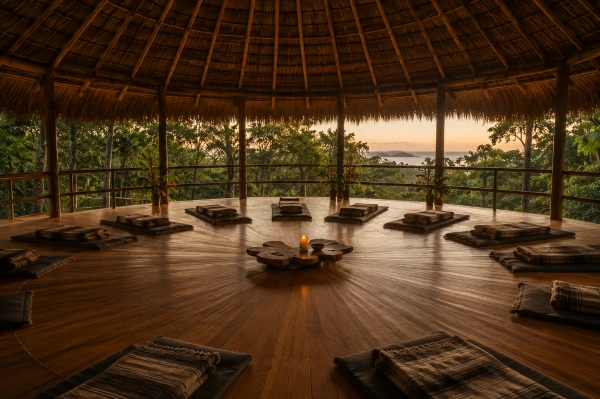
Ayahuasca for couples means two partners attend the same retreat and drink the same plant medicine, usually in one ceremony room but on separate mats. Each person has their own private experience. What you share is the retreat and the integration work afterward, not the ceremony itself.
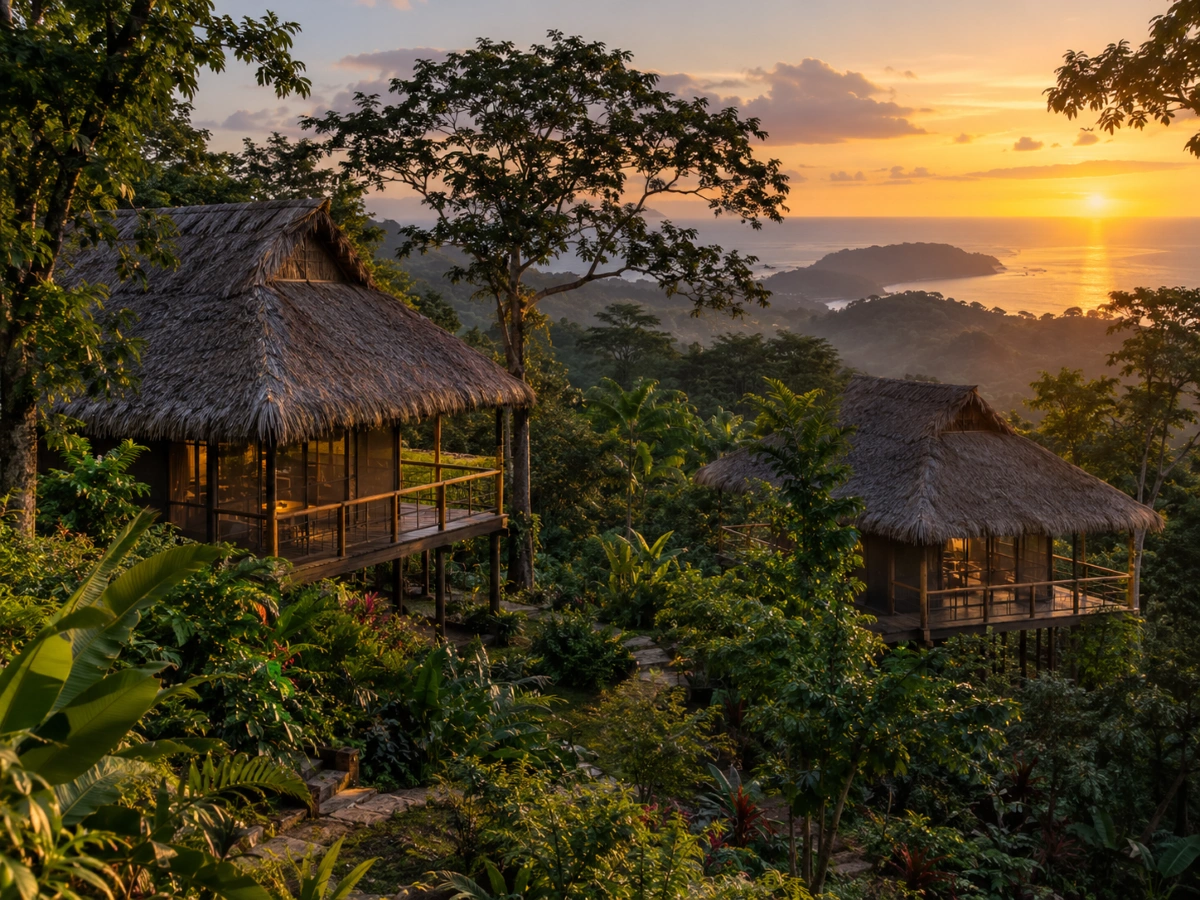
The practical setup at our center: a maximum of 12 guests, 4 ceremonies across 10 days, 3 healers and 2 facilitators in the room every night, on 8 hectares of forest on the Nicoya Peninsula. Couples move through the same schedule as everyone else. Nothing about how our ceremonies run changes because two people arrived together. That is deliberate, and the rest of this guide explains why.
Should you sit together during the ceremony?
You do not have to, and at many centers you will not. Sitting together is not what makes the medicine work. Doing your own work is.
At our center, Taita Lorenzo assigns each person’s mat at the start of the retreat, based on what he reads in them during a short pre-ceremony practice called mirando. He places people by what he senses they need, not by who arrived as a couple. Partners are often not next to each other, and that is on purpose. Soltara, another Costa Rica center, states the same thing plainly: they seat couples apart in the maloca to reduce energetic influence and keep each person focused on their own process.
Most couples-retreat listings sell the opposite: a shared trip you move through together. That framing sets partners up to caretake each other instead of doing their own work. When you spend the night watching whether your partner is okay, you are not in your own experience. You are managing theirs. The center’s 8 years of hosting couples, and the way other lineage-focused centers seat people apart, point the same direction. Proximity is not connection here. Two people each doing their own honest work, then comparing notes later, is what changes a relationship.
What ayahuasca actually is
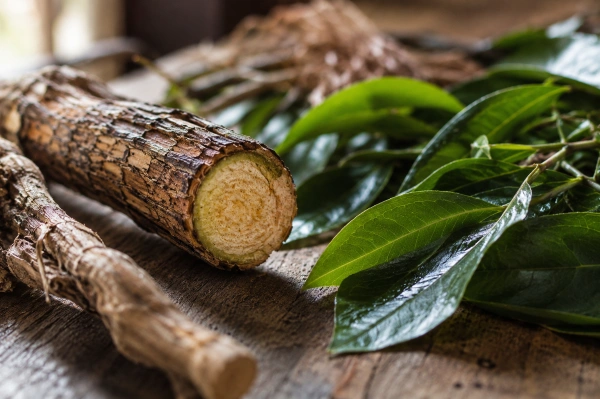
Ayahuasca is a brew of two plants: the Banisteriopsis caapi vine and a leaf that contains DMT. On its own, DMT taken by mouth is broken down before it reaches the brain. The vine is what changes that. According to a 2016 pharmacology review in Frontiers in Pharmacology, the vine’s MAO inhibitors let the DMT stay active long enough to work. That single fact drives most of the safety rules later in this guide, because MAO inhibitors interact with several common medications and foods.
A ceremony runs 4 to 6 hours, usually at night, and often includes purging (vomiting), emotional release, and shifts in perception. For couples, the point is simple: this is a strong medicine with real effects on the body and mind, not a shared activity you sample together.
What couples gain, and what they don’t
Ayahuasca does not hand couples a better relationship. It can give each partner a clearer view of their own patterns, and the relationship benefits from that second-hand.
What guests describe most often is not a joint vision. It is seeing their own part in a recurring fight, feeling empathy for a partner’s history they had stopped noticing, or dropping a defense they had carried for years. Naturalistic research on ayahuasca reports increases in wellbeing and shifts in outlook for many people, which lines up with what we see, though studies on couples specifically are thin. Treat the relationship gains as a by-product of two people each doing individual work, not a service the medicine performs on the pair.
Can ayahuasca fix a relationship?
No. It can show two people the truth of where they are, which sometimes strengthens a relationship and sometimes ends it.
If you are coming to make a failing relationship work, that is the wrong reason, and an honest center will say so. The medicine does not negotiate or take sides. It tends to surface what is already true. For a solid relationship, that can mean more closeness. For one held together by avoidance, it can mean the avoidance stops working. Neither outcome is the medicine failing.
Can ayahuasca cause a breakup?
Yes, it can, and any center that tells you otherwise is selling something. It surfaces long-avoided truths, and it can shift how a person sees their own life.
When one partner changes and the other does not, the fit between them changes too. Sometimes that shows up in the weeks after, not in the ceremony. This is not a reason to avoid the medicine as a couple. It is a reason to go in without the expectation that you will both come out the same people who arrived, pointed in the same direction.

Safety and screening for both partners
Ayahuasca is not safe for everyone, and each partner has to be screened on their own. One of you can be cleared while the other is not.
At our center, screening runs per person: a detailed medical form, a review by our medical director Dra. Sofia Vargas Mora (an emergency-medicine physician), and a 30 to 45 minute video call with a facilitator. About 13% of applicants are turned away. A 2024 systematic review in the International Journal of Toxicology lists the conditions that matter most, and we screen for all of them: a personal or family history of psychosis, schizophrenia, bipolar disorder, or mania; pregnancy; and serious heart conditions, since ayahuasca raises blood pressure and heart rate.
Medications are where couples get tripped up. SSRIs and other serotonergic drugs need a supervised taper, 6 weeks at our center, because the vine’s MAO inhibitors carry a theoretical risk of serotonin toxicity. Confirmed cases of serotonin syndrome from ayahuasca are extremely rare, and the same 2024 systematic review found no confirmed cases in its analysis, but the taper is a precaution worth taking, and both partners have to complete their own. Purging is normal, not a complication: that review found about 70% of users report nausea or vomiting, and only about 2.3% of a 10,836-person survey sought any medical attention afterward.
The takeaway for couples: do not assume that because one of you is cleared, both of you are. Screen early, and be ready for the possibility that only one of you drinks.
What if one of you doesn’t want to drink?
One partner can come without drinking. We call it a companion place, and we host 2 to 3 companion guests a year.
A companion follows the same dieta, joins the integration circles, can receive plant baths, and may sit in and observe ceremony, but does not take the medicine. The price is $3,400, the same as a shared casita. This suits a partner who wants to support their spouse without drinking, or someone testing the setting before committing to a future retreat. It is a real option with a real price, which is more than most centers will put in writing.
Preparing as a couple
Prepare as two individuals who happen to be traveling together. The dieta and the intention-setting are personal, not joint.
For at least 2 weeks before arrival: no red meat, no alcohol, no fermented or aged foods, no cannabis. For 1 to 2 weeks: no sexual activity, which the Inga tradition treats as part of holding the energetic container. Set your own intention rather than a shared one, and resist the urge to script what the other should work on. If either partner is tapering a medication, that has to be done under their own doctor and finished before arrival. Couples who prepare together tend to do it well when they hold each other accountable to the dieta and leave each other’s inner work alone.
What if one partner has a hard night?
You are not your partner’s caretaker in ceremony. The team is. That is what the staffing is for.
A facilitator is always within reach in the maloca. If someone hits fear or a crisis, a healer comes to their mat and sings to them directly, and Dra. Vargas is on site every ceremony night. Our head facilitator, Daniela Restrepo, gives couples a specific briefing before the first ceremony, in these words: “Your partner’s experience is not yours to manage. Focus on your own process. You will have a lifetime to share what happened here.” Partners sleep in separate casitas by default for the same reason. If you spend your ceremony listening for your partner across the room, you rob yourself of the reason you came. Let the team hold them. Do your own work.
Integration after you get home
The relationship work happens after the retreat, not during it. The ceremony opens the material. Integration is where a couple does something with it.
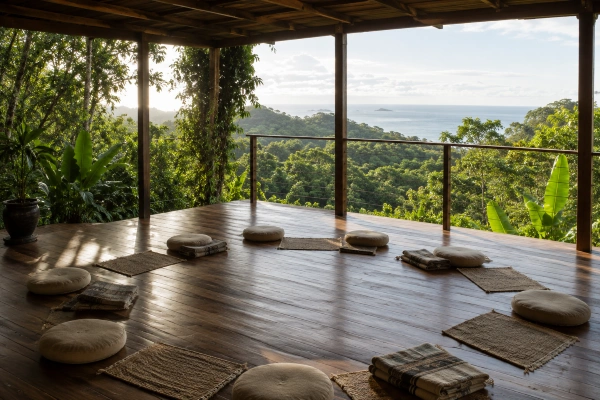
Our program, called Puente, runs follow-up calls at 1 week, 3 weeks, 2 months, 6 months, and 12 months, led by Daniela, a licensed clinical psychologist. For couples, the guidance is the same as during the retreat: share what each of you saw once you are grounded, not at 2am on a mat. Some of the most useful conversations happen weeks later, when the intensity has settled and you can talk without either person still inside the experience.
Ayahuasca and the law in Costa Rica
In Costa Rica, ayahuasca sits in a legal gray area. In the United States and most guests’ home countries, it does not.
The US Drug Enforcement Administration has listed DMT, ayahuasca’s active compound, as a Schedule I drug since 1971, which makes ayahuasca federally illegal there. The one carve-out is religious use: the Supreme Court’s 2006 ruling let one church use the brew under the Religious Freedom Restoration Act. In Costa Rica, DMT is not on the controlled-substances schedules, so centers operate openly. That is tolerance under a gray area, not a law that legalizes ceremony, and we are direct with guests about the difference. For couples traveling in, your home-country laws still govern what you do and say once you are back.
What a couples ayahuasca retreat costs in 2026
At our center in 2026, a couple sharing a casita pays $3,400 per person for the 10-day retreat. A private casita is $4,200 per person. There are no upsells, no premium ceremony, and no private-healer add-on.
| Option | Price per person | What it includes |
|---|---|---|
| Shared casita (couples) | $3,400 | 10 days, 4 ceremonies, all meals, plant baths, integration circles, Puente follow-up |
| Private casita (each partner) | $4,200 | Same, in separate private cabins |
| Non-drinking companion | $3,400 | Dieta, integration, plant baths, may observe ceremony; does not drink |
Not included: international flights, the San Jose to Tambor domestic flight ($80 to $120 one-way), travel insurance (required), and any pre-retreat hotel. For context, listings that aggregate couples retreats worldwide show prices from a few hundred to several thousand dollars, often for far shorter stays with larger groups.
How this differs from couples therapy
Ayahuasca is not couples therapy, and it is not a substitute for it. They do different jobs.
Structured couples therapies, such as emotionally focused therapy, have clinical-trial support for improving relationship satisfaction, with a trained therapist guiding the pair over weeks. Ayahuasca has no comparable trial evidence as a couples treatment, and the work happens inside each individual, not between the two of you in the room. Our integration lead is a licensed psychologist, and we refer couples to therapists in their home countries. The sensible move is to use both, in sequence, rather than expecting a retreat to replace the ongoing work a therapist does.
Who should skip it, for now
Skip ayahuasca as a couple, at least for now, if any of these fit. One partner is being talked into it and does not want to go. You are hoping the medicine will decide whether to stay together, so you do not have to. Either partner has a condition on the screening list and has not been cleared. Or you cannot sit with the idea that your partner might have a completely different night than you, and change in a direction you did not plan for.
None of that means never. It means the timing or the reason is off, and a good center would rather tell you that than take the booking. If you are unsure where you land, a screening call with someone who has watched hundreds of couples go through this is the fastest way to find out. Coming to ayahuasca as a couple can be worth it, as long as you arrive as two people ready to do your own work.
Frequently asked questions
Can you do ayahuasca as a couple?
Yes. Most established centers accept couples, and at Ayahuasca Retreats Costa Rica about 1 in 10 guests over 8 years arrived with a partner. You attend the same retreat and drink the same medicine, but each person has a separate, private experience. The retreat is shared; the ceremony is individual.
Do couples drink ayahuasca in the same ceremony?
Usually yes, in the same room but on separate mats. At our center the healer assigns each person’s mat by what he senses they need, not by who came as a couple, so partners are often not side by side. Some centers deliberately seat couples apart to help each person focus on their own process.
Can ayahuasca fix a relationship?
No. Ayahuasca does not repair a relationship or take sides. It tends to surface what is already true, which can strengthen a strong relationship or end one held together by avoidance. Coming to save a failing relationship is the wrong reason to attend.
Is a couples ayahuasca retreat safe if one partner has a health condition?
Each partner is screened individually, and one can be cleared while the other is not. About 13% of applicants are turned away. Contraindications include a personal or family history of psychosis, schizophrenia, bipolar disorder, or mania, plus pregnancy and serious heart conditions. SSRIs and similar medications require a supervised taper before arrival.
What does a couples ayahuasca retreat cost?
At our center in 2026, a couple sharing a casita pays $3,400 per person for the 10-day retreat, and a private casita is $4,200 per person. That covers 4 ceremonies, all meals, plant baths, integration circles, and follow-up calls. Flights, the domestic flight to Tambor, and travel insurance are extra.
Can one partner attend without drinking ayahuasca?
Yes. A companion place costs $3,400 and lets one partner follow the dieta, join integration circles, receive plant baths, and observe ceremony without drinking. We host 2 to 3 companion guests a year, usually a partner supporting their spouse or someone testing the setting first.
Is ayahuasca legal?
It depends on where you are. The US lists DMT, ayahuasca’s active compound, as a Schedule I substance, so ayahuasca is federally illegal there except for a narrow religious exemption. In Costa Rica, DMT is not on the controlled-substances schedules, so centers operate openly in a legal gray area rather than under a law that legalizes ceremony.
Ask us anything on this page. We answer in writing.
Applications are read by a physician within 48 hours. If the medicine is not right for you now, we will say so.