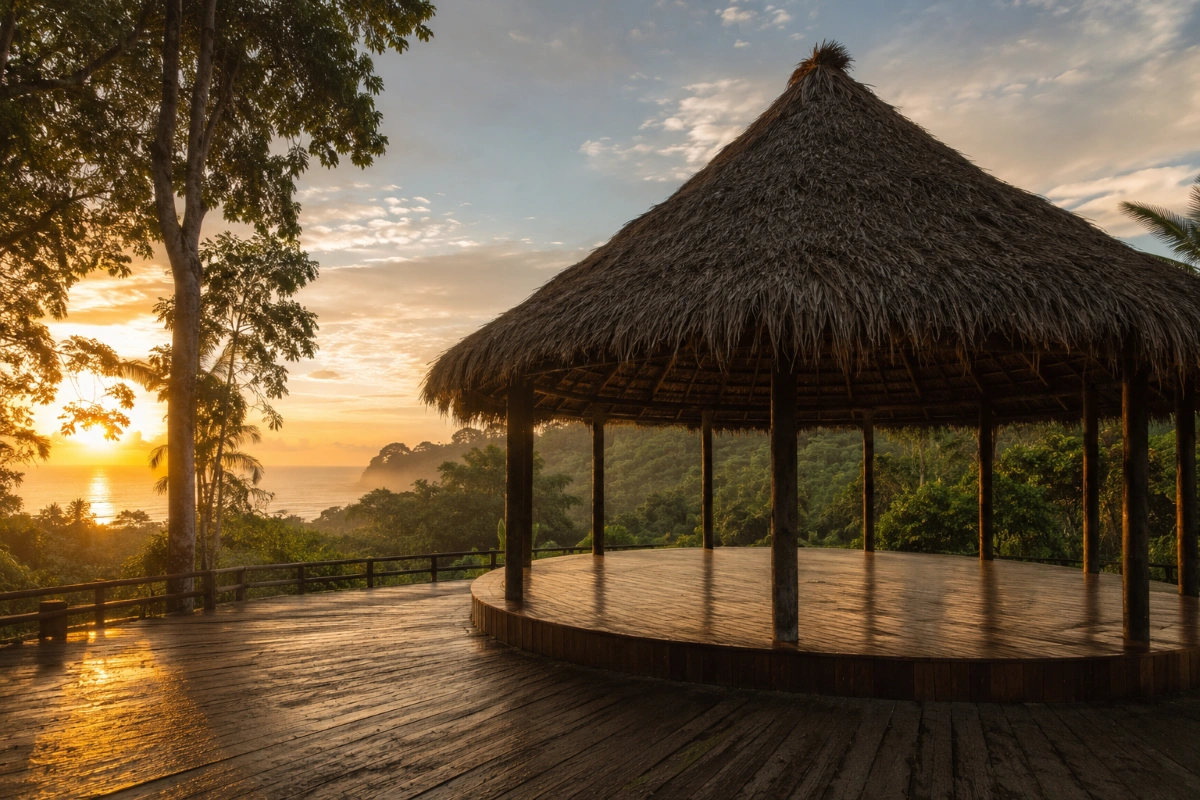
If you’re sober or in recovery and thinking about ayahuasca, you want a straight answer to one question: will this set me back? Here it is. Ayahuasca will not automatically undo your recovery, and it is not a cure that replaces the work you’ve already done. The real risks are more specific than the ones people fight about online. The most dangerous one is mixing it with common recovery medications, and that mistake can kill you. Whether it counts as breaking sobriety depends on how you define sobriety, and people in recovery disagree on that in good faith. I co-founded a center in Costa Rica after my younger brother died of a fentanyl overdose. We’ve worked with about 1,800 guests, and a good share arrive sober or in recovery. This is what I’ve watched work, what I’ve watched go wrong, and what the studies actually say.
What is ayahuasca?
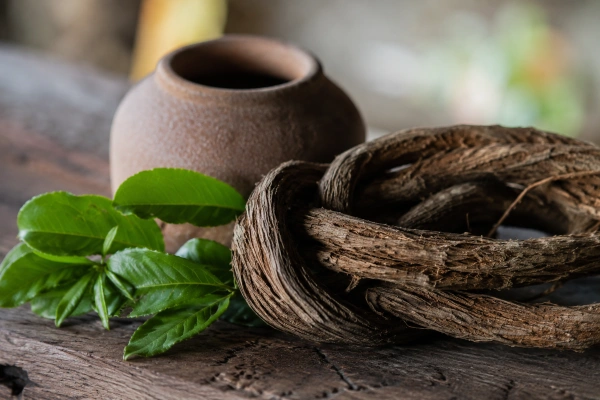
Ayahuasca is a bitter tea brewed from two Amazonian plants: the Banisteriopsis caapi vine and a leaf that contains DMT, a psychedelic compound. Healers in the Amazon have used it in ceremony for generations. It brings on four to six hours of altered perception, strong emotion, and often vomiting, which practitioners call purging.
People in recovery ask about it because the stories point at the thing recovery is built on: facing what you were running from. That pull is real. So are the risks. Both deserve a plain answer.
Does ayahuasca break your sobriety?
It depends on how you define sobriety, and this is where reasonable people split.
The abstinence model, the one most of AA and NA run on, is simple: any mind-altering substance is a slip. By that standard, drinking ayahuasca is not sober, full stop. That view has kept millions of people alive, and I won’t wave it away.
There’s a second definition. The Substance Abuse and Mental Health Services Administration defines recovery as “a process of change through which individuals improve their health and wellness, live self-directed lives, and strive to reach their full potential,” supported by four dimensions: health, home, purpose, and community. By that standard the question isn’t the molecule. It’s whether your life is actually getting better.
My position, after eight years of this: the label matters less than two things. Your intent, and the medical reality. If you’re using “it’s medicine, not a drug” to sneak a high past your own rules, you already know what that is. If you’re doing supervised healing work as one part of a recovery plan, that’s a different act, even if some rooms will still call it a relapse. Be honest with yourself about which one you’re doing. The medicine tends to expose the answer anyway.
The myth that ayahuasca just trades one addiction for another
Ayahuasca has a low potential for dependence. It is not a drug people crave the way they crave alcohol or opioids.
The best evidence comes from people who drink it regularly. In a 2018 study of 1,947 members of a Brazilian ayahuasca church, published in Frontiers in Psychiatry, current alcohol use disorder ran at 1.0% among members aged 35 and older, against 10.4% in the general population. The authors concluded that ceremonial use “carries a minimal risk of abuse potential or dependence formation.” The pharmacology backs this up. The vine’s active compound, harmine, is an MAO inhibitor, not a reinforcing high, and DMT does not drive compulsive use.
Here’s the part I won’t dress up. The real risk isn’t chemical. It’s psychological. Some people start chasing ceremony after ceremony instead of doing the daily work, using retreats the way they once used a bottle. I’ve watched it happen. Trading a substance for a spiritual bypass is still trading. A serious center will name that pattern out loud, not sell you the next booking.
What the research actually shows
The signal is promising and the evidence is thin. There is no large randomized trial on ayahuasca for addiction. Anyone who tells you the science is settled is selling something.
The most cited ayahuasca study is small. In a 2013 observational study of 12 people from a First Nations community in British Columbia, published in Current Drug Abuse Reviews, a four-day retreat with two ceremonies and group counseling tracked substance use over six months. Self-reported cocaine use fell from 60% to 0% (p=0.003). Alcohol dropped from 50% to 20%, tobacco from 82% to 64%. Cannabis and opiate use didn’t move. Twelve people, no control group. It points somewhere. It proves little.
The strongest randomized evidence in this space isn’t ayahuasca at all. It’s psilocybin. In a 2022 trial of 95 adults with alcohol use disorder, reported in JAMA Psychiatry, the psilocybin group spent 9.7% of days heavy drinking over 32 weeks, against 23.6% for placebo. That’s a different molecule in a different setting, and it’s worth being clear about that rather than borrowing its credibility for ayahuasca.
I can add our own numbers, with the same caution. Since 2020 we’ve tracked standardized depression and PTSD scores on every guest. Across more than 280 guests with three-month follow-up, depression scores drop by an average of 5.8 points and hold at three months. And the figure most centers won’t print: 27% show no meaningful improvement at three months. That’s not a number I enjoy. It’s the number that keeps the promise honest. You can read why we started tracking any of this on our story page.
Ayahuasca and your recovery medications
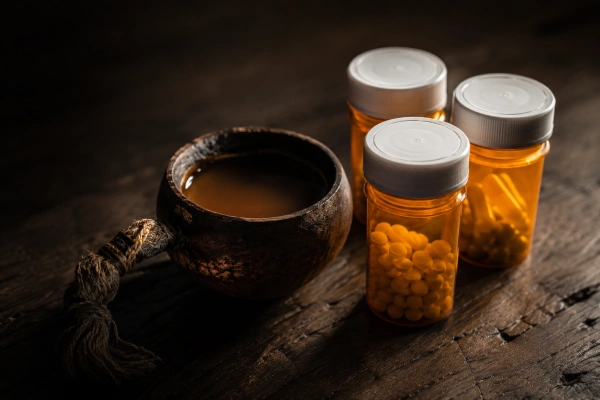
This is the part most guides skip, and it’s the one that can actually kill you. Never stop any medication on your own to qualify for a ceremony.
The clearest danger is antidepressants. SSRIs and SNRIs raise serotonin, ayahuasca contains MAO inhibitors, and the combination can trigger serotonin syndrome, a medical emergency. A 1998 paper in the Journal of Psychoactive Drugs named this risk decades ago. Our rule is a six-week taper, eight weeks for fluoxetine, run by your prescribing doctor and signed off by ours.
Recovery brings its own medication list, and each one needs a real medical review before ceremony.
| Medication | Why it matters for ceremony | What a safe center requires |
|---|---|---|
| SSRIs / SNRIs (sertraline, venlafaxine) | Serotonin syndrome risk with ayahuasca | 6-week taper, 8 for fluoxetine, prescriber-supervised |
| MAOIs (pharmaceutical) | Compounds the same serotonin risk | Absolute exclusion |
| Benzodiazepines (Xanax, Klonopin) | Withdrawal can be medically dangerous | Physician-supervised taper, case by case |
| Naltrexone (Vivitrol) | Recovery medication; needs review, not a solo stop | Medical review; do not stop to qualify |
| Buprenorphine / methadone (MAT) | Opioid-based; interaction and stability review | Physician review; may rule out that retreat cycle |
| Disulfiram (Antabuse) | Interactions and dieta conflicts | Medical review before acceptance |
The rule underneath the table is simple. A responsible center makes a physician review every medication you take. If a place doesn’t ask what’s in your cabinet, that tells you what kind of place it is. Walk away.
Is doing ayahuasca a relapse?
If you use it to get high or to escape, yes. If you use it as supervised healing inside a recovery plan, many clinicians and plenty of people in recovery would call it something else. But your program might not, and that matters more than the theory.
I take the 12-step position seriously because I’ve seen it work. If ceremony will leave you feeling you failed, or if your sponsor and your home group treat it as a relapse, that fallout can threaten your recovery more than the tea ever would. Recovery runs on connection. Don’t blow up your support system for an experience. Talk to the people who hold your sobriety before you book anything.
Who should not use ayahuasca in recovery
Some people in recovery should not do this, at least not now. We turn away 13% of applicants, and this is a big part of why.
Skip it, or wait, if you’re in early recovery and still stabilizing, if you’re in active use, if your program forbids it and that structure is holding you up, or if you carry certain conditions. Current lithium, current pharmaceutical MAOIs, un-tapered SSRIs, active psychosis, and recent stimulant use are hard stops for us. Every applicant does a video call and a physician review of their meds before we accept anyone.
The honest line I give people: if you’re in crisis right now, you need stabilization, not a ceremony. Ayahuasca opens things up. That’s the opposite of what an unstable moment needs. Come back when your feet are under you.
How to protect your sobriety if you go
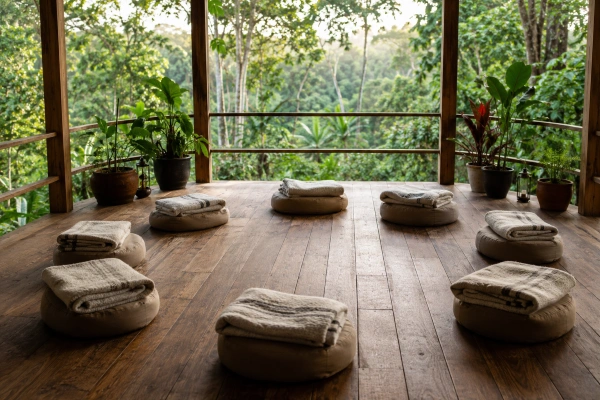
Treat ayahuasca as one part of recovery, not a replacement, and plan the landing before you leave.
Get real sober time behind you first. Choose a center with a screening process that can reject you and a doctor on site. And take integration as seriously as the ceremony, because that’s where recovery holds or breaks. One guest arrived six weeks off methamphetamine, nearly relapsing. He drank with us, and two weeks after he got home he checked himself into a residential recovery program, voluntarily. A year later he was still clean. The ceremony didn’t replace treatment. It walked him to the door of it. That’s the pattern that lasts, and it’s why we run our ayahuasca ceremonies with follow-up calls and an integration program rather than a handshake at the airport.
And don’t chase it. If you find yourself booking the next retreat before you’ve done anything with the last one, that’s the old pattern wearing new clothes.
Where the ayahuasca evidence stands in 2026
The observational signal is real, the randomized trials are missing, psilocybin is further along in the lab, and the two things that decide outcomes are medical safety and integration. That’s the current picture, and it will keep moving. Anyone who gives you more certainty than that is guessing or selling.
Frequently asked questions
Does ayahuasca break your sobriety?
It depends on your definition. Under the abstinence model that AA and NA use, any psychoactive substance counts as a slip. SAMHSA defines recovery more broadly, around health, home, purpose, and community. What matters most in practice is your intent and whether your support system treats it as a relapse.
Is ayahuasca addictive?
No, it has low dependence potential. A 2018 study of 1,947 regular ceremonial users found current alcohol use disorder at 1.0% among those 35 and older, versus 10.4% in the general population, and concluded the risk of dependence is minimal. The real risk is psychological, chasing ceremonies instead of doing the work.
Can I do ayahuasca if I take antidepressants?
Not without a medically supervised taper. SSRIs and SNRIs can trigger serotonin syndrome when combined with ayahuasca, a life-threatening reaction flagged in the research since 1998. A safe center requires a six-week taper, eight weeks for fluoxetine, run by your prescriber. Never stop your medication on your own.
Does ayahuasca actually work for addiction recovery?
The evidence is early and small. The most cited study, of 12 people, saw cocaine use fall from 60% to 0% over six months, but it had no control group. There are no large randomized ayahuasca trials yet, so treat it as a possible support, not a proven treatment.
How long should I be sober before trying ayahuasca in recovery?
Get through early recovery and reach stability first. We assess this individually on a video call, and we turn away people who are in active use, in crisis, or too early to handle an experience that opens everything up. Timing matters more than most people expect.
Is ayahuasca legal?
In the United States, DMT is a Schedule I substance, so ayahuasca is federally illegal except for two religious groups granted exemptions, including the UDV through the 2006 Supreme Court case Gonzales v. O Centro. In Costa Rica the plants are not scheduled, which is why ceremony centers operate there, though it is a legal gray area rather than explicit approval.
Can ayahuasca replace rehab or a 12-step program?
No. In our own data, 27% of guests show no significant improvement at three months, and the ones who last treat ceremony as a complement to recovery work, not a substitute. The strongest outcomes pair the experience with integration, therapy, or a program, not with quitting everything else.
The bottom line
If you’re sober or in recovery, ayahuasca is neither the relapse some fear nor the cure others sell. The dangers worth your attention are concrete: a medication interaction that can be fatal, and timing it too early in your recovery. Handle those with a real screening process and a doctor, and treat the ceremony as one step inside a larger plan.
If you want to talk through whether this is safe for where you are, reach out to our team and we’ll walk you through the medical screening before you decide anything. And if you’re struggling right now, call or text the SAMHSA National Helpline at 1-800-662-4357. It’s free, confidential, and open every day.
Ask us anything on this page. We answer in writing.
Applications are read by a physician within 48 hours. If the medicine is not right for you now, we will say so.